


scoobyclinics turbo's just got billet I mean better!


Former Sponsor
Joined: Jul 2003
Posts: 1,411
Likes: 0
From: www.scoobyclinic.com

why could the engine not breath any more in what sence do you mean i.e heads or are we talking fmic or headers upipe them type of mods as my engine is a forged bottom end with standard version 4 heads but i do have full supportting mods
i may just have to drive my version 4 all the way to you guys and you can put on the 42 and see what happens and if i dont see 400- 410
then were chuck the 46 on
i may just have to drive my version 4 all the way to you guys and you can put on the 42 and see what happens and if i dont see 400- 410
then were chuck the 46 on
Hi,
standard bugeye wrx heads, forged bottom end but no work carried out on cams or head porting, lets not forget though it did do 399 BHP.

We would do the SC42 on your car, if its not what you require its no big deal to swap it out for a 46, the only restraint is time, the car may have to be here for a couple of days, we do have courtesy sheds FOC.

cheers
Kev
Former Sponsor
Joined: Jul 2003
Posts: 1,411
Likes: 0
From: www.scoobyclinic.com
Hi,
The very fact we have an ice driver weekend to give away, gave rise to our original idea of the purchase of a billet turbo giving free entry to a prize draw seem a little limited, so we have organised a sprint challenge at the newly re-surfaced Blyton Park raceway instead.
In association with JAVALIN trackday events it will take place on Sunday the 2nd of October 2011.
All makes and models will be welcome especially scoobs of course and Scoobyclinic tech staff will be in attendance to give technical assistance including mechanical and computer diag on the day.
The entry fee for competitors will be £125.00, spectators very welcome entry fee to be confirmed but we are pushing to make it free.
The private entry (non tuner) winner of the day receives this............


An adrenaline packed weekend in Sweden driving our ice driver scoob on the frozen lakes all expenses paid including accommodation and the flight.
This whole event will over the next few days evolve, we hope, and if successful we will run it next year as a sprint series, allowing owners of tuned cars to let their hair down with the possibility of a great prize, a prize better than any seen in other race series such as Time Attack or the nippon challenge etc.
A web page with details about the day and on-line entry for competitors should be live within a few days.
Any views are welcome please don't hesitate to call to book in or wait for the on-line booking to go live, let it evolve, lets test those Billets.
cheers
Kev
The very fact we have an ice driver weekend to give away, gave rise to our original idea of the purchase of a billet turbo giving free entry to a prize draw seem a little limited, so we have organised a sprint challenge at the newly re-surfaced Blyton Park raceway instead.
In association with JAVALIN trackday events it will take place on Sunday the 2nd of October 2011.
All makes and models will be welcome especially scoobs of course and Scoobyclinic tech staff will be in attendance to give technical assistance including mechanical and computer diag on the day.
The entry fee for competitors will be £125.00, spectators very welcome entry fee to be confirmed but we are pushing to make it free.
The private entry (non tuner) winner of the day receives this............
An adrenaline packed weekend in Sweden driving our ice driver scoob on the frozen lakes all expenses paid including accommodation and the flight.
This whole event will over the next few days evolve, we hope, and if successful we will run it next year as a sprint series, allowing owners of tuned cars to let their hair down with the possibility of a great prize, a prize better than any seen in other race series such as Time Attack or the nippon challenge etc.
A web page with details about the day and on-line entry for competitors should be live within a few days.
Any views are welcome please don't hesitate to call to book in or wait for the on-line booking to go live, let it evolve, lets test those Billets.
cheers
Kev
Former Sponsor
Joined: Jul 2003
Posts: 1,411
Likes: 0
From: www.scoobyclinic.com
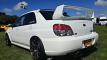
Hi,
the 42 will spool a little quicker and in some cases on a 2.0 ltr engine the SC46 can choke up at the top, adding more boost causes power to fall off, I stress "in only a few cases", hence the re-introduction of the SC42, and the fact that some people prefer the BB core to the sleeve bearing version.
As shown in an earlier post the SC42 did indeed out spool the MD321 H, made the same power and completely removed the customers problem of compressor surge, not a fair test for the turbo as the engine was maxed out and could not breath any more, therefore top end figures from either turbo were not conclusive.
Hope the above helps
cheers
Kev
the 42 will spool a little quicker and in some cases on a 2.0 ltr engine the SC46 can choke up at the top, adding more boost causes power to fall off, I stress "in only a few cases", hence the re-introduction of the SC42, and the fact that some people prefer the BB core to the sleeve bearing version.
As shown in an earlier post the SC42 did indeed out spool the MD321 H, made the same power and completely removed the customers problem of compressor surge, not a fair test for the turbo as the engine was maxed out and could not breath any more, therefore top end figures from either turbo were not conclusive.
Hope the above helps
cheers
Kev

Former Sponsor
Joined: Jul 2003
Posts: 1,411
Likes: 0
From: www.scoobyclinic.com
Hi,
yours hasn't been mapped to that point yet as the inlet pipe is collapsing on the dyno, there are a number of reasons why this doesn't happen on the road, for example air flow over the pipe will reduce its temperature making the silicon less pliable therefore less likely to collapse.
Once this issue is sorted we will see what happens when JGM carries out the final map.
Cheers
Kev
yours hasn't been mapped to that point yet as the inlet pipe is collapsing on the dyno, there are a number of reasons why this doesn't happen on the road, for example air flow over the pipe will reduce its temperature making the silicon less pliable therefore less likely to collapse.
Once this issue is sorted we will see what happens when JGM carries out the final map.
Cheers
Kev


Could be wrong here, but I've read/been told the issue isn't the intake pipe, but the actual filter size! As the turbo is sucking so hard, and can't get enough air through the filter, obviously things will start to collapse!
I don't know if it's true, but definitely sounds right in theory!
I don't know if it's true, but definitely sounds right in theory!

Could be wrong here, but I've read/been told the issue isn't the intake pipe, but the actual filter size! As the turbo is sucking so hard, and can't get enough air through the filter, obviously things will start to collapse!
I don't know if it's true, but definitely sounds right in theory!
I don't know if it's true, but definitely sounds right in theory!

Scooby Regular
iTrader: (34)
Joined: Apr 2009
Posts: 1,419
Likes: 0
From: Trying to pull a 10 second 1/4 mile running a standard 2.0ltr engine...
Does actually make sense when you think about the problem logically,the pipe only closes on the rolling road and not on the actual open road,air is restricted on the rollers as the car is static and the only air is that supplied by the fan,on the road the pipe doesnt shut as a huge volume of air is readily available aswell as being forced into the cold air feed as the car moves forward at speed.Also the silicone intake pipe will become much softer on the rollers due to the greater under bonnet temps thus allowing it to close easier than it would on the road where much colder air is being passed through it plus under bonnet temps will be much lower.This has been bothering me for days now lee and the comments made by chris above have finally lit a spark,i just hope great minds think alike as they say,im not saying my mind is one of them LOL,but im sure you get the jist.

Former Sponsor
iTrader: (4)
Joined: Jan 2001
Posts: 16,548
Likes: 2
From: ECU Mapping - www.JollyGreenMonster.co.uk
Inket pipe will be effected by filter and by the rigidity of the pipe itself (which temls will effect).
If you treat the inlet pipe as a straw and stick you finger over the end inevitably it will suck shut, once that has happenned once it wilk happen easier again.
With regard to Lee's car if currently it only sucks the inlet pipe shut on the dyno the it wont be long before it does so on the road too.
378 @ 1bar is very positive sign that once issue with inlet pipe is sorted and it runs 1.6bar flat we should be nearer expected output.
Simon
If you treat the inlet pipe as a straw and stick you finger over the end inevitably it will suck shut, once that has happenned once it wilk happen easier again.
With regard to Lee's car if currently it only sucks the inlet pipe shut on the dyno the it wont be long before it does so on the road too.
378 @ 1bar is very positive sign that once issue with inlet pipe is sorted and it runs 1.6bar flat we should be nearer expected output.
Simon

From my experience, claims of the inlet pipe sucking shut are blamed on a host of other problems.
If you look at some of the Group "N" Subaru Rally Cars you will see they have a very soft rubber inlet tract and this is so they can be removed and refitted quickly when a turbo needs changing during an event. This obviates the need for lifting the manifold which is necessary with the OE hard plastic item. These rubber inlets are so soft you can squeeze them shut quite easily with just one hand.
For an inlet tract to suck shut there must be a depression, negative pressure difference or vacuum in the inlet tract and this is because of a blocked filter, dense filter material as in the STi panel or just not enough filter surface area.
Many cars that I see have inadequately sized filters.
If you look at some of the Group "N" Subaru Rally Cars you will see they have a very soft rubber inlet tract and this is so they can be removed and refitted quickly when a turbo needs changing during an event. This obviates the need for lifting the manifold which is necessary with the OE hard plastic item. These rubber inlets are so soft you can squeeze them shut quite easily with just one hand.
For an inlet tract to suck shut there must be a depression, negative pressure difference or vacuum in the inlet tract and this is because of a blocked filter, dense filter material as in the STi panel or just not enough filter surface area.
Many cars that I see have inadequately sized filters.

Scooby Regular
Joined: Jan 2006
Posts: 2,629
Likes: 3
From: Enginetuner Plymouth for 4wd RR Mapping Apexi Ecutek Alcatek Proper Garage More than just a laptop!
From my experience, claims of the inlet pipe sucking shut are blamed on a host of other problems.
If you look at some of the Group "N" Subaru Rally Cars you will see they have a very soft rubber inlet tract and this is so they can be removed and refitted quickly when a turbo needs changing during an event. This obviates the need for lifting the manifold which is necessary with the OE hard plastic item. These rubber inlets are so soft you can squeeze them shut quite easily with just one hand.
For an inlet tract to suck shut there must be a depression, negative pressure difference or vacuum in the inlet tract and this is because of a blocked filter, dense filter material as in the STi panel or just not enough filter surface area.
Many cars that I see have inadequately sized filters.
If you look at some of the Group "N" Subaru Rally Cars you will see they have a very soft rubber inlet tract and this is so they can be removed and refitted quickly when a turbo needs changing during an event. This obviates the need for lifting the manifold which is necessary with the OE hard plastic item. These rubber inlets are so soft you can squeeze them shut quite easily with just one hand.
For an inlet tract to suck shut there must be a depression, negative pressure difference or vacuum in the inlet tract and this is because of a blocked filter, dense filter material as in the STi panel or just not enough filter surface area.
Many cars that I see have inadequately sized filters.
I had another one on Friday, fitted with a Billet wheeled 321T initial runs at actuator pressure of 1 bar seemed promising at 360bhp on 97 ron Esso fuel.
Turning the boost up of course started to see torque rise but the top end power would fall away and it wouldn't hold any more than a bar.
After various tests of actuator preload, boost solenoid tests and time beginning to run out, we did a quick 20% meth map and left it at 390bhp and 410lbft @ 1 bar boost as the owner was drag racing at a local 1/8th mile event the next day.
He came 2nd in class and 3rd overall with a 7.54 1/8th.
We have discussed with the owner of the car fitting a H + S twisted kit therefore removing the inlet tract from under the inlet manifold for good.
The filter on this car is an RCM cone that we have ran on cars at up to 700bhp, so I doubt that it is inadequate in this circumstance.
Martyn
Scooby Regular
iTrader: (34)
Joined: Apr 2009
Posts: 1,419
Likes: 0
From: Trying to pull a 10 second 1/4 mile running a standard 2.0ltr engine...
i have the largest of all the rcm filters fitted to my car so it will be quick and easy enough to fit it to lee`s when its next on the rollers,would be and easy fix if thats all it is,fingers crossed.

Former Sponsor
iTrader: (4)
Joined: Jan 2001
Posts: 16,548
Likes: 2
From: ECU Mapping - www.JollyGreenMonster.co.uk
Lee's filter is more than adequate. I wasnt there on dyno run but kev says pipe was shutting so have no reason to think otherwise.
Harvey,
Group n is around 78bhp less at same boost and runs a restrictor so the volume of air being sucked through the inlet pipe is very different.
Simon
Harvey,
Group n is around 78bhp less at same boost and runs a restrictor so the volume of air being sucked through the inlet pipe is very different.
Simon

Moderator
iTrader: (4)
Joined: Jul 2004
Posts: 18,687
Likes: 0
From: The Terry Crews of moderation. P P P P P P POWER!!
Brings back memories. When Bob was putting the final map on my car post running in, the session had to be called off as the SC46 was collapsing the inlet pipe (an RCM item would you believe - must have been a duff one) this raised Bob and David's eyebrows somewhat. Went with a Perrin item in the end if that helps any?
Made a quite amusing sound as I recall!
Made a quite amusing sound as I recall!

When will 3" piping to the filter become restrictive? I have modified my lower splash guard to sit lower so I can fit the biggest 9" AEM dryflow filter in the inner wing but the space in the inner wing makes an 4" inlet and piping to the filter inpossible so I have to use the 3" inch version.
I had a Saab with 421 hp with just 2,5" to the filter but that was probably on the limit.
I had a Saab with 421 hp with just 2,5" to the filter but that was probably on the limit.

Scooby Newbie
Joined: May 2011
Posts: 16
Likes: 0
Some of the above only confirms what I am saying. eg :
The pipe does not cause the restriction it is the filter.
The pipe collapses because the air pressure in the inlet tract is below the ambient /atmospheric air pressure and the vacum therefore "sucks in" the pipe. Over a relatively large surface area it does not take a lot of vacum to collapse a pipe.
I use a magnahelix guage to measure this depression.
That is exactly correct and the whole point I am making.
The fact it does not happen on a Gp N rally car with soft inlet tract and lower cfm consumption simply means the air filter on the GP N car is big enough to cause no signifigant depression.
A filter does not suddenly stop working. The pressure depression gradually increases as air flow increases. As a rule, the pressure depression will be a lot less at say .5 bar than at 2 bar boost pressure and reducing that depression with a bigger/better filter or better/straighter/shorter inlet tract reduces the work the turbo has to do as it does not have to overcome the depression. There is also substantially less chance of inlet tract collapse.
If you think any of the above is not correct, invest in magnahelix guages and do some experiments. The results may surprise you and they are useful for many other types of air flow and pressure investigations.
Some problems are blamed on collapsing inlet tracts when that is not the issue.
BTW, the silicon inlet tract sold by ScoobyClinic is excellent.
When will 3" piping to the filter become restrictive?
The pipe collapses because the air pressure in the inlet tract is below the ambient /atmospheric air pressure and the vacum therefore "sucks in" the pipe. Over a relatively large surface area it does not take a lot of vacum to collapse a pipe.
I use a magnahelix guage to measure this depression.
Group n is around 78bhp less at same boost and runs a restrictor so the volume of air being sucked through the inlet pipe is very different.
The fact it does not happen on a Gp N rally car with soft inlet tract and lower cfm consumption simply means the air filter on the GP N car is big enough to cause no signifigant depression.
The filter on this car is an RCM cone that we have ran on cars at up to 700bhp, so I doubt that it is inadequate in this circumstance.
If you think any of the above is not correct, invest in magnahelix guages and do some experiments. The results may surprise you and they are useful for many other types of air flow and pressure investigations.
Some problems are blamed on collapsing inlet tracts when that is not the issue.
BTW, the silicon inlet tract sold by ScoobyClinic is excellent.
Last edited by harvey; Aug 16, 2011 at 07:29 AM.