


Roll Centre / Bump Steer mod - worth doing?


Thread Starter
Joined: Dec 2006
Posts: 4,096
Likes: 8
From: The South

When I spoke with my tuner he suggested you need ones with adjustable arms like the Whiteline or Super Pro kits.
I believe the Apex ones don't have arms and aren't therefore as effective.
I'd go for the Superpro kit.
I believe the Apex ones don't have arms and aren't therefore as effective.
I'd go for the Superpro kit.
Are you talking about the track rod ends?
The general consensus here was to change the bottom ball joints only in order to avoid bumpsteer but someone I know (Gigsy) with a WRX mentioned that fitting the ball joints only does create bump steer.
I am confused.
The general consensus here was to change the bottom ball joints only in order to avoid bumpsteer but someone I know (Gigsy) with a WRX mentioned that fitting the ball joints only does create bump steer.
I am confused.

Bump steer is really not a problem on the Impreza (new age & classic), unless really over-lowered.
If anything, any bump steer seems to 'help' the front turn-in better, provided al the rest is working well
Extended ball joints will not create bump steer, nor will they counter it. They are for retrieving roll centre and to a certain extent anti-dive
If anything, any bump steer seems to 'help' the front turn-in better, provided al the rest is working well
Extended ball joints will not create bump steer, nor will they counter it. They are for retrieving roll centre and to a certain extent anti-dive

It is so confusing TBH as everyones suggests different things, so there is no clear outcome , It is needed or not, as ALK it doesnt do how its is described as anti lift kit, it just adds aditional castor which is not a bad thing i guess... Sometimes i think its just another marketing thing unless the upgrade works with the other suporting mods but not alone... Sorry for highjacking a bit , but i took a pic of my car when the aligment was done , so tell me what your opinion is... Do i need it or not, i do get a bit of bump steer thought.. Spec is stock shocks/eibach pro kit, Alk , fliped wishbone plates...
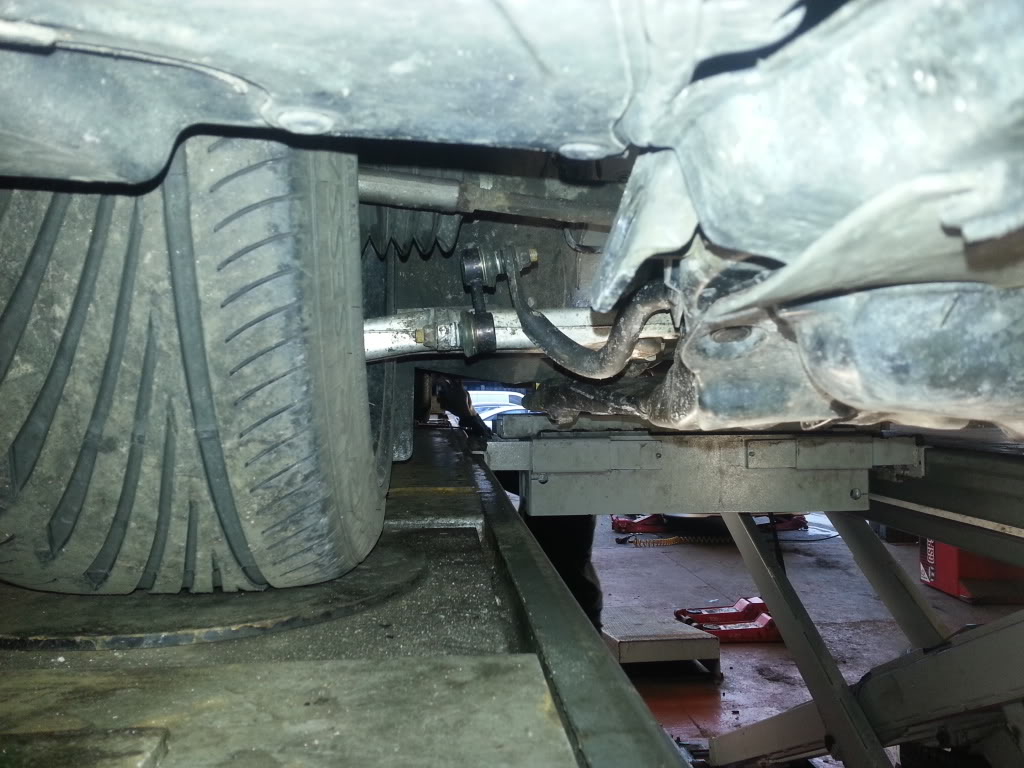
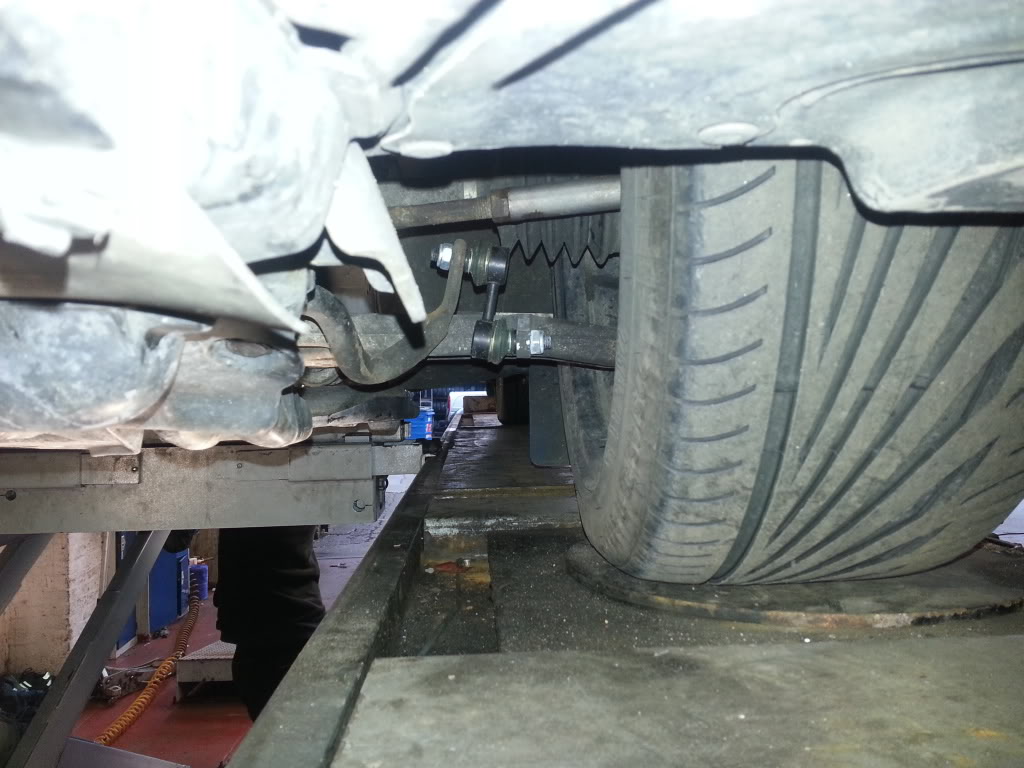
Your wishbones are almost horizontal, so I would say you need the ball joints (the Eibachs drop the car a fair amount). As soon you start cornering the wishbone will lift into the bad part of the camber curve and you'll have lost any dynamic geometry, including most importantly negative camber, so your front grip levels will drop off significantly
The caster bushes do work. They will give a bit more weight to the steering, increase
negative camber in turns on the outer front wheel, increase weight on the
inside front wheel in turns and reduce caster loss, all resulting in more
front end grip and traction.
The SuperPro ones are pretty good
The caster bushes do work. They will give a bit more weight to the steering, increase
negative camber in turns on the outer front wheel, increase weight on the
inside front wheel in turns and reduce caster loss, all resulting in more
front end grip and traction.
The SuperPro ones are pretty good
Your wishbones are almost horizontal, so I would say you need the ball joints (the Eibachs drop the car a fair amount). As soon you start cornering the wishbone will lift into the bad part of the camber curve and you'll have lost any dynamic geometry, including most importantly negative camber, so your front grip levels will drop off significantly
The caster bushes do work. They will give a bit more weight to the steering, increase
negative camber in turns on the outer front wheel, increase weight on the
inside front wheel in turns and reduce caster loss, all resulting in more
front end grip and traction.
The SuperPro ones are pretty good
The caster bushes do work. They will give a bit more weight to the steering, increase
negative camber in turns on the outer front wheel, increase weight on the
inside front wheel in turns and reduce caster loss, all resulting in more
front end grip and traction.
The SuperPro ones are pretty good
http://www.importcarparts.co.uk/part...n=y&searchKey=
So is it nescessary to get the track rod ends as well or apex extended ball joints will do the job?
Thread Starter
Joined: Dec 2006
Posts: 4,096
Likes: 8
From: The South
It is so confusing TBH as everyones suggests different things, so there is no clear outcome , It is needed or not, as ALK it doesnt do how its is described as anti lift kit, it just adds aditional castor which is not a bad thing i guess... Sometimes i think its just another marketing thing unless the upgrade works with the other suporting mods but not alone... Sorry for highjacking a bit , but i took a pic of my car when the aligment was done , so tell me what your opinion is... Do i need it or not, i do get a bit of bump steer thought.. Spec is stock shocks/eibach pro kit, Alk , fliped wishbone plates...
It doesn't just add castor it also changes the behaviour of the car under braking by preventing dive under heavy braking or the car'a nose lifting or squirming around on acceleration.
I found this particularly noticeable on my car so surprised you haven't also realised this benefit.
I'd have to disagree with your evaluation of the ALK.
It doesn't just add castor it also changes the behaviour of the car under braking by preventing dive under heavy braking or the car'a nose lifting or squirming around on acceleration.
I found this particularly noticeable on my car so surprised you haven't also realised this benefit.
It doesn't just add castor it also changes the behaviour of the car under braking by preventing dive under heavy braking or the car'a nose lifting or squirming around on acceleration.
I found this particularly noticeable on my car so surprised you haven't also realised this benefit.
Bonesetter , are you refering to this kit ?
http://www.importcarparts.co.uk/part...n=y&searchKey=
So is it nescessary to get the track rod ends as well or apex extended ball joints will do the job?
http://www.importcarparts.co.uk/part...n=y&searchKey=
So is it nescessary to get the track rod ends as well or apex extended ball joints will do the job?

Hi there
Personally we are running more track/drag orientated setup(FR Camber -2.00,RR Camber -1.50),ALK not sure,we are have fitted if its helps in the against the front end lifting(we are have experience with front end lifting with fitted ALK),due this not sure if I would buy again ALK
Roll centre/bump steer kit,I can say only from our experience,is worth to do
About the springs have look for Swift springs,they have good feedback on US forums
Jura
Personally we are running more track/drag orientated setup(FR Camber -2.00,RR Camber -1.50),ALK not sure,we are have fitted if its helps in the against the front end lifting(we are have experience with front end lifting with fitted ALK),due this not sure if I would buy again ALK
Roll centre/bump steer kit,I can say only from our experience,is worth to do
About the springs have look for Swift springs,they have good feedback on US forums
Jura
Hi there
Personally we are running more track/drag orientated setup(FR Camber -2.00,RR Camber -1.50),ALK not sure,we are have fitted if its helps in the against the front end lifting(we are have experience with front end lifting with fitted ALK),due this not sure if I would buy again ALK
Roll centre/bump steer kit,I can say only from our experience,is worth to do
About the springs have look for Swift springs,they have good feedback on US forums
Jura
Personally we are running more track/drag orientated setup(FR Camber -2.00,RR Camber -1.50),ALK not sure,we are have fitted if its helps in the against the front end lifting(we are have experience with front end lifting with fitted ALK),due this not sure if I would buy again ALK
Roll centre/bump steer kit,I can say only from our experience,is worth to do
About the springs have look for Swift springs,they have good feedback on US forums
Jura
Had a dig about swift springs, TBH they seem to be very Eibach type spring, although eibach is a progressive spring the ride is ok when driving sensibly... when pushing their getting harder but not enough as mentioned about Swifts as well... I'm just not really sure if its worth getting them shipped from us and ditch my eibach ones, i'll install the extended ball joints/ bump steer kit and will see how i'm getting on.... I still have my original jdm springs which are a bit harsher than a uk bug sti i think... Just felt like that so im not sure. I know there either perfomance or looks, but the right hight on stock ones is
 ... When fitting eibachs i didnt thought that they'll drop the car so much, the reason i went for them as i had them on both my classics and it felt nice, had p1 springs before which cracked
  so chose eibachs...
Theres always things to improve, but in my case is if i'm gonna spend the money , i need to feel the difference, so far nothing convinced me yet.
Mantas
Hi Mantas
I know how is it,if its worth not sure,really we are bought ALK and we are suffered with front end lifting(mainly on hard acceleration on drag strip)
Really when we are bought the Roll centre/bump steer kit and after few problems fitted too,we are been surprised how car felt straight away(mainly on roundabouts), cornering has improved
Jura
I know how is it,if its worth not sure,really we are bought ALK and we are suffered with front end lifting(mainly on hard acceleration on drag strip)
Really when we are bought the Roll centre/bump steer kit and after few problems fitted too,we are been surprised how car felt straight away(mainly on roundabouts), cornering has improved
Jura

Thread Starter
Joined: Dec 2006
Posts: 4,096
Likes: 8
From: The South

God knows lol

You probably just need a bit more power  (joke
(joke  )
)
So in people's opinions is this a worth while upgrade?
Reason for asking is I have read a bit about them and indigo gt by me have an offer on, If you buy the whiteline kit you get a free set of whiteline front solid drop links, and is £160, so is a very good price, but after reading this thread I have seen whiteline mentioned and some not seeing to like them, will I see as much improvement with he whiteline kit compared to some of the other kits out there?
Any help appreciated :
:
Cheers
(joke )So in people's opinions is this a worth while upgrade?
Reason for asking is I have read a bit about them and indigo gt by me have an offer on, If you buy the whiteline kit you get a free set of whiteline front solid drop links, and is £160, so is a very good price, but after reading this thread I have seen whiteline mentioned and some not seeing to like them, will I see as much improvement with he whiteline kit compared to some of the other kits out there?
Any help appreciated
:Cheers
Thread Starter
Joined: Dec 2006
Posts: 4,096
Likes: 8
From: The South
You probably just need a bit more power (joke )
So in people's opinions is this a worth while upgrade?
Reason for asking is I have read a bit about them and indigo gt by me have an offer on, If you buy the whiteline kit you get a free set of whiteline front solid drop links, and is £160, so is a very good price, but after reading this thread I have seen whiteline mentioned and some not seeing to like them, will I see as much improvement with he whiteline kit compared to some of the other kits out there?
Any help appreciated:
Cheers
(joke )So in people's opinions is this a worth while upgrade?
Reason for asking is I have read a bit about them and indigo gt by me have an offer on, If you buy the whiteline kit you get a free set of whiteline front solid drop links, and is £160, so is a very good price, but after reading this thread I have seen whiteline mentioned and some not seeing to like them, will I see as much improvement with he whiteline kit compared to some of the other kits out there?
Any help appreciated
:Cheers
I think that the ALK is a much more worthwhile investment than a front ARB (which I also did on the last car and noticed little to no difference whatsoever)
Ok so so far what i've found regards the bump steer kits , i'm not sure i want to go with the rod ends as was suggested it's not really needed, SuperPro and whiteline dont do the only ball joint kit like apex , the price difference is obvious 85 -150 .... That means i'm overpaying 65 quid? Also it's does correct only the front , what about the rear, it's lowered as well , does that mean another set must be fitted to the rear as well?
Thread Starter
Joined: Dec 2006
Posts: 4,096
Likes: 8
From: The South
Apex price is supposedly £85 for one pair.
Super pro and whiteline kits increase both ball joints so I think actually in the scheme of things the Apex kits end up the biggest rip off considering what you get!
Super pro and whiteline kits increase both ball joints so I think actually in the scheme of things the Apex kits end up the biggest rip off considering what you get!
Hows is that? Apex ball joints are the same extended as w line or su pro. It just doesn't have the rod ends which are not necessary . Its been discused a lot on nasioc and here....
Last edited by mantazini; Feb 24, 2013 at 01:11 AM.
Thread Starter
Joined: Dec 2006
Posts: 4,096
Likes: 8
From: The South
Not yet, inlet hose is kinked due to fitting.
Going to see if we can move the turbo enough to straighten the kink; car goes in Tuesday.
If not, will have to order up a Perrin inlet hose and fit that
Glad you saw the 400 mark
Going to see if we can move the turbo enough to straighten the kink; car goes in Tuesday.
If not, will have to order up a Perrin inlet hose and fit that
Glad you saw the 400 mark
Thread Starter
Joined: Dec 2006
Posts: 4,096
Likes: 8
From: The South
Well, if you get them and fit them pls let us know how you get on
I'd have to disagree with your evaluation of the ALK.
It doesn't just add castor it also changes the behaviour of the car under braking by preventing dive under heavy braking or the car'a nose lifting or squirming around on acceleration.
I found this particularly noticeable on my car so surprised you haven't also realised this benefit.
It doesn't just add castor it also changes the behaviour of the car under braking by preventing dive under heavy braking or the car'a nose lifting or squirming around on acceleration.
I found this particularly noticeable on my car so surprised you haven't also realised this benefit.
In fact it lets the nose dive more under braking or lift under acceleration.
I can't remember where I read this but a quick google will reveal the reason.

Thread Starter
Joined: Dec 2006
Posts: 4,096
Likes: 8
From: The South
Yes as per previous posts mate I'm aware that's what it does in theory I'm just saying how it makes the car feel to me lol

I copied this from Whiteline's pdf data
5Th December 2003
Revised version
Discussion Paper
Effect of Whiteline Anti-Lift Kit (ALK)
Revised 5th December 2003
Jakub Zawada B.E. (Mech)
5Th December 2003
Revised version
Introduction to Anti-Dive and Anti-Lift
“Anti” features in suspension systems are a characteristic that can be used to influence
the stiffness of the front or rear suspension under traction forces (under braking or
accelerating).
The individual terms are relatively straightforward and self-explanatory with the “anti”
reducing or totally restricting the characteristic (lifting or diving). In the front suspension
there may be levels of anti-dive during braking and anti-lift during accelerating
(assuming traction to the front wheels is present), similarly in the rear there could be antilift
during braking and anti-squat during acceleration.
It should also be noted that these characteristic can also be reversed into a “pro”
characteristic (as in pro-lift at the front under braking).
Anti features can only be implemented under the influence of the braking or accelerating
forces at the wheels, for example a rear wheel drive vehicle cannot have an anti-lift
characteristic in the front (as there is no drive to the front wheels).
These characteristics do not change the steady state load transfer (during braking or
accelerating) at the tire contact patch. The load transfer during steady state acceleration or
braking is a function of the wheelbase, CG height, and the braking force.
100% of anti-dive or anti-lift would give no deflections of the suspension (from the static
ride height) during braking and accelerating. It does this by passing the extra load during
accelerations through the suspension components instead of the spring. Similarly 0%
anti-dive would pass the entire load through the spring giving maximum deflections.
Anti-dive and anti-lift are calculated by the position of the side view instant center; this
imaginary point in space is generated by the geometry of the suspension system.
The Effect of the Whiteline Anti-Lift Kit (ALK)
The % anti-dive or lift in a suspension system (the Subaru WRX front end for example) is
a function of the position of the side view instant center (SVIC). This SVIC is the pivot
point for the side view swing arm (also the pivot point of the suspension at that instant),
which is a line drawn from the tire contact patch to the instant center (under braking – for
acceleration it is drawn from the wheel center).
The slope or angle of this swing arm (effectively the position of the SVIC) describes the
amount of anti-dive and anti-lift present in the suspension system.
5Th December 2003
Revised version
The SVIC is found by the intersection of two lines. The first is the projection of the lower
control arm, say through the chassis mounts behind the front wheels, the second
line is the normal to the axis of the strut tower at the top of the strut, projected behind the
front wheel in the case of the Subaru WRX.
(Note: to be absolutely correct these lines should be projected onto the wheel center
plane, so any lateral drop or rise in the control arms will effect the SVIC position.
However in most cases the control arm angles are usually low, or flat when looking from
the front of the car, and give minimal effect)
The diagram below shows the SVIC and swing arm details for the Subaru WRX.
"couldn't paste diag."
Together with the position of the SVIC, the wheelbase, CG height, % front torque (for
anti-lift under acceleration) and % front braking (for anti-dive) are required to calculate
the amount of anti features in the front suspension.
With the ALK fitted to the WRX, the rear mount of the front lower control arm is
lowered by approximately 20mm. There is also a castor change present by moving the
mount outwards, this adds positive castor to the suspension.
The effect of this component results in the following anti-dive and anti-lift properties in
the Subaru WRX, expressed as percentages in the following table.
5Th December 2003
Revised version
Standard WRX WRX with ALK
Wheel Base 2530 2530 mm
CG Height 600 600 mm
% Front Braking 70 70 %
% Front Traction 60 60 %
SVIC Height 457 26.2 mm
Swing Arm Length 5949 11495 mm
% Anti-Dive 22.7 0 %
% Front Anti-Lift* 6.5 -6.1 %
* Negative value denotes pro-lift
As can be seen from the table, the anti-dive reduces to 0% from 22.7% and the anti-lift is
reduced to a pro-lift value of 6.1% from 6.5% anti-lift.
Effect of Anti-Dive and Anti-Lift as Modified by the Whiteline ALK
As mentioned previously if 100% anti-lift or anti-dive is incorporated then all the
longitudinal load transfer experienced under braking and accelerating will pass through
the suspension components (namely the control arms) leaving the springs unloaded with
no deflection present (from static ride height). 0% would pass the entire load onto the
spring giving maximum deflections.
This can be used to stiffen the suspension system under braking or accelerating.
In the case of the Subaru WRX fitted with the ALK, the suspension system becomes
softer during braking and accelerating actions, as both anti-dive and anti-lift have been
reduced. A softer suspension will give rise to larger deflections.
An experiment was then set out to show that this was the case. A standard Subaru WRX
was used initially and deflections were captured using a digital video camera during
acceleration runs. The same WRX was then fitted with an ALK and the procedure was
repeated again. The results are shown in the following table.
5Th December 2003
Revised version
Whiteline ALK Test - 23.10.2002
Standard WRX
Measure A Measure B Ratio Distance Average (mm)
980 740 0.76 529 517
890 650 0.73 511
890 650 0.73 511
Standard WRX with ALK
Measure A Measure B Ratio Distance Average (mm)
900 690 0.77 537 535
870 660 0.76 531
910 700 0.77 538
Measure A = (700mm) Bottom of Sill to black trim below door Mirror
Measure B = Bottom of wheel to guard in Video
Average is actual bottom of wheel to guard distance
As can be seen from the table with the ALK fitted the WRX had a higher wheel (bottom
of wheel) to guard height indicating higher deflections present.
This concurs with what is expected with the modified anti-lift percentages being reduced
(to pro-lift in this case).
A softer front suspension during acceleration and braking will even out the load on the
front tires, giving a higher total cornering load available or more front-end grip. This will
lead to less understeer when cornering under power or brakes.
Another way of looking at this is that under power or brakes the effective spring stiffness
is lower, reducing the front-end anti-roll resistance, hence reducing weight transfer at the
front and less understeer.
Softer front rates will also allow better wheel tracking over rough roads, keeping the tires
in contact with the ground.
The drawback of the ALK is that there is an increased amount of deflections or pitch; this
can affect suspension geometry if there is a very large amount of pitch. However the
ALK adds additional castor that will more than cover any reduction in castor due to
excessive pitch during braking.
5Th December 2003
Revised version
Additional Discussion – Anti-Dive and NVH
Many sources describe that too much Anti-dive in the front end of suspension systems
can have adverse effects. Anti-dive percentages of more than 50% are rarely seen in
vehicles without very careful design to the suspension systems (for example noncompliant
bearing type joints on the suspension), and some recommend (“Tune to Win”
Carroll Smith) no more than 30% be used as even this much will have an undesirable
effect.
The effect of Anti-dive is to increase the loading of the suspension components and
suspension bushes. This increases deflection in the system that can affect the geometry
(for example reducing castor under braking), and also increases friction in the bushes,
which could lead to suspension lockup and less than adequate wheel tracking over the
ground.
Such “stiction” and load transfer through the control arms into the chassis all work to
raise the levels of NVH (noise vibration harshness). By decreasing the anti-dive from
23% to 0% with the ALK, any NVH associated with the anti-dive in the Subaru WRX
has been removed, therefore assuming all things being the same (apart from the
installation of a Whiteline ALK) there should be less NVH present.
This gives scope to increase the bush stiffness in search of enhanced suspension
geometry control. Therefore it is can be possible to stiffen the bushes of the front
suspension without raising the NVH level when the car is fitted with an ALK.
Conclusion
With the ALK fitted to the Subaru WRX, a softer suspension will be present during
braking and accelerating. This will help traction, as the wheel will be able to track the
ground more precisely. Also in terms of balance the front end will have a proportionally
lower roll resistance during traction or braking, aiding in reducing the power understeer
effect that is present in these cars.
5Th December 2003
Revised version
Discussion Paper
Effect of Whiteline Anti-Lift Kit (ALK)
Revised 5th December 2003
Jakub Zawada B.E. (Mech)
5Th December 2003
Revised version
Introduction to Anti-Dive and Anti-Lift
“Anti” features in suspension systems are a characteristic that can be used to influence
the stiffness of the front or rear suspension under traction forces (under braking or
accelerating).
The individual terms are relatively straightforward and self-explanatory with the “anti”
reducing or totally restricting the characteristic (lifting or diving). In the front suspension
there may be levels of anti-dive during braking and anti-lift during accelerating
(assuming traction to the front wheels is present), similarly in the rear there could be antilift
during braking and anti-squat during acceleration.
It should also be noted that these characteristic can also be reversed into a “pro”
characteristic (as in pro-lift at the front under braking).
Anti features can only be implemented under the influence of the braking or accelerating
forces at the wheels, for example a rear wheel drive vehicle cannot have an anti-lift
characteristic in the front (as there is no drive to the front wheels).
These characteristics do not change the steady state load transfer (during braking or
accelerating) at the tire contact patch. The load transfer during steady state acceleration or
braking is a function of the wheelbase, CG height, and the braking force.
100% of anti-dive or anti-lift would give no deflections of the suspension (from the static
ride height) during braking and accelerating. It does this by passing the extra load during
accelerations through the suspension components instead of the spring. Similarly 0%
anti-dive would pass the entire load through the spring giving maximum deflections.
Anti-dive and anti-lift are calculated by the position of the side view instant center; this
imaginary point in space is generated by the geometry of the suspension system.
The Effect of the Whiteline Anti-Lift Kit (ALK)
The % anti-dive or lift in a suspension system (the Subaru WRX front end for example) is
a function of the position of the side view instant center (SVIC). This SVIC is the pivot
point for the side view swing arm (also the pivot point of the suspension at that instant),
which is a line drawn from the tire contact patch to the instant center (under braking – for
acceleration it is drawn from the wheel center).
The slope or angle of this swing arm (effectively the position of the SVIC) describes the
amount of anti-dive and anti-lift present in the suspension system.
5Th December 2003
Revised version
The SVIC is found by the intersection of two lines. The first is the projection of the lower
control arm, say through the chassis mounts behind the front wheels, the second
line is the normal to the axis of the strut tower at the top of the strut, projected behind the
front wheel in the case of the Subaru WRX.
(Note: to be absolutely correct these lines should be projected onto the wheel center
plane, so any lateral drop or rise in the control arms will effect the SVIC position.
However in most cases the control arm angles are usually low, or flat when looking from
the front of the car, and give minimal effect)
The diagram below shows the SVIC and swing arm details for the Subaru WRX.
"couldn't paste diag."
Together with the position of the SVIC, the wheelbase, CG height, % front torque (for
anti-lift under acceleration) and % front braking (for anti-dive) are required to calculate
the amount of anti features in the front suspension.
With the ALK fitted to the WRX, the rear mount of the front lower control arm is
lowered by approximately 20mm. There is also a castor change present by moving the
mount outwards, this adds positive castor to the suspension.
The effect of this component results in the following anti-dive and anti-lift properties in
the Subaru WRX, expressed as percentages in the following table.
5Th December 2003
Revised version
Standard WRX WRX with ALK
Wheel Base 2530 2530 mm
CG Height 600 600 mm
% Front Braking 70 70 %
% Front Traction 60 60 %
SVIC Height 457 26.2 mm
Swing Arm Length 5949 11495 mm
% Anti-Dive 22.7 0 %
% Front Anti-Lift* 6.5 -6.1 %
* Negative value denotes pro-lift
As can be seen from the table, the anti-dive reduces to 0% from 22.7% and the anti-lift is
reduced to a pro-lift value of 6.1% from 6.5% anti-lift.
Effect of Anti-Dive and Anti-Lift as Modified by the Whiteline ALK
As mentioned previously if 100% anti-lift or anti-dive is incorporated then all the
longitudinal load transfer experienced under braking and accelerating will pass through
the suspension components (namely the control arms) leaving the springs unloaded with
no deflection present (from static ride height). 0% would pass the entire load onto the
spring giving maximum deflections.
This can be used to stiffen the suspension system under braking or accelerating.
In the case of the Subaru WRX fitted with the ALK, the suspension system becomes
softer during braking and accelerating actions, as both anti-dive and anti-lift have been
reduced. A softer suspension will give rise to larger deflections.
An experiment was then set out to show that this was the case. A standard Subaru WRX
was used initially and deflections were captured using a digital video camera during
acceleration runs. The same WRX was then fitted with an ALK and the procedure was
repeated again. The results are shown in the following table.
5Th December 2003
Revised version
Whiteline ALK Test - 23.10.2002
Standard WRX
Measure A Measure B Ratio Distance Average (mm)
980 740 0.76 529 517
890 650 0.73 511
890 650 0.73 511
Standard WRX with ALK
Measure A Measure B Ratio Distance Average (mm)
900 690 0.77 537 535
870 660 0.76 531
910 700 0.77 538
Measure A = (700mm) Bottom of Sill to black trim below door Mirror
Measure B = Bottom of wheel to guard in Video
Average is actual bottom of wheel to guard distance
As can be seen from the table with the ALK fitted the WRX had a higher wheel (bottom
of wheel) to guard height indicating higher deflections present.
This concurs with what is expected with the modified anti-lift percentages being reduced
(to pro-lift in this case).
A softer front suspension during acceleration and braking will even out the load on the
front tires, giving a higher total cornering load available or more front-end grip. This will
lead to less understeer when cornering under power or brakes.
Another way of looking at this is that under power or brakes the effective spring stiffness
is lower, reducing the front-end anti-roll resistance, hence reducing weight transfer at the
front and less understeer.
Softer front rates will also allow better wheel tracking over rough roads, keeping the tires
in contact with the ground.
The drawback of the ALK is that there is an increased amount of deflections or pitch; this
can affect suspension geometry if there is a very large amount of pitch. However the
ALK adds additional castor that will more than cover any reduction in castor due to
excessive pitch during braking.
5Th December 2003
Revised version
Additional Discussion – Anti-Dive and NVH
Many sources describe that too much Anti-dive in the front end of suspension systems
can have adverse effects. Anti-dive percentages of more than 50% are rarely seen in
vehicles without very careful design to the suspension systems (for example noncompliant
bearing type joints on the suspension), and some recommend (“Tune to Win”
Carroll Smith) no more than 30% be used as even this much will have an undesirable
effect.
The effect of Anti-dive is to increase the loading of the suspension components and
suspension bushes. This increases deflection in the system that can affect the geometry
(for example reducing castor under braking), and also increases friction in the bushes,
which could lead to suspension lockup and less than adequate wheel tracking over the
ground.
Such “stiction” and load transfer through the control arms into the chassis all work to
raise the levels of NVH (noise vibration harshness). By decreasing the anti-dive from
23% to 0% with the ALK, any NVH associated with the anti-dive in the Subaru WRX
has been removed, therefore assuming all things being the same (apart from the
installation of a Whiteline ALK) there should be less NVH present.
This gives scope to increase the bush stiffness in search of enhanced suspension
geometry control. Therefore it is can be possible to stiffen the bushes of the front
suspension without raising the NVH level when the car is fitted with an ALK.
Conclusion
With the ALK fitted to the Subaru WRX, a softer suspension will be present during
braking and accelerating. This will help traction, as the wheel will be able to track the
ground more precisely. Also in terms of balance the front end will have a proportionally
lower roll resistance during traction or braking, aiding in reducing the power understeer
effect that is present in these cars.
Thread Starter
Joined: Dec 2006
Posts: 4,096
Likes: 8
From: The South