


Dog Training - Do you bother?

Thread Starter
Scooby Senior
Joined: Jun 2006
Posts: 14,333
Likes: 0
From: RIP - Tam the bam & Andy the Jock

I'm not really that into bite training as I can't see a point where I'll want to (or for that matter need to) use it, and I'd rather Sam stays a 'pet' - in the sense that he's not every waiting for a "KILL" command... 
Another good book is 'John Fisher - Think Dog' it's what I'm working through atm. I should point out that Sam was rescued at 7-8 Months from a housing estate in a rough area of Nottingham and it's taken me 5 months to turn him from an underweight wreck of a dog that shook continuously to a confident and happy dog, so the training had to work alongside the emotional stuff which is why he's a late developer as such. The important thing is that a dogs brain is still forming until the age of 4 whereby at that point you'll end up with what you have for the rest of its life. So he's still in the learning cycle and going from strength to strength - which is rewarding for an animal that would've been destroyed.
Another good book is 'John Fisher - Think Dog' it's what I'm working through atm. I should point out that Sam was rescued at 7-8 Months from a housing estate in a rough area of Nottingham and it's taken me 5 months to turn him from an underweight wreck of a dog that shook continuously to a confident and happy dog, so the training had to work alongside the emotional stuff which is why he's a late developer as such. The important thing is that a dogs brain is still forming until the age of 4 whereby at that point you'll end up with what you have for the rest of its life. So he's still in the learning cycle and going from strength to strength - which is rewarding for an animal that would've been destroyed.

SN Fairy Godmother
Joined: Nov 2003
Posts: 35,246
Likes: 0
From: Far Far Away
I agree, it was fun taking mine...
Until the trainer started using us as "bait" for the problem dogs, 'cos (initially) my Sam wouldn't react.
In the end I stopped going because he actually did start to react to their provocation. The best thing was that he never had a problem with being on a lead, he saw it as "work" time and always watched me.
Now sadly missed... R.I.P. Sam.
dunx
Until the trainer started using us as "bait" for the problem dogs, 'cos (initially) my Sam wouldn't react.
In the end I stopped going because he actually did start to react to their provocation. The best thing was that he never had a problem with being on a lead, he saw it as "work" time and always watched me.
Now sadly missed... R.I.P. Sam.
dunx
We only went to two classes. It was a complete waste of time.
I have found it much more helpful to talk to dog owners on here, who have given me invaluable advice, which has worked


Scooby Regular
Joined: Aug 2002
Posts: 39,877
Likes: 0
Make sense. He is adorable in every other way, just an *** sometimes on the lead. Mind it does not help when you get some idiot with three dogs off the lead, and they have no control. They charge at ours, who get himself well wound up. We just turn him round and walk the other way. Seems to work.
Any pics of yours Shexy
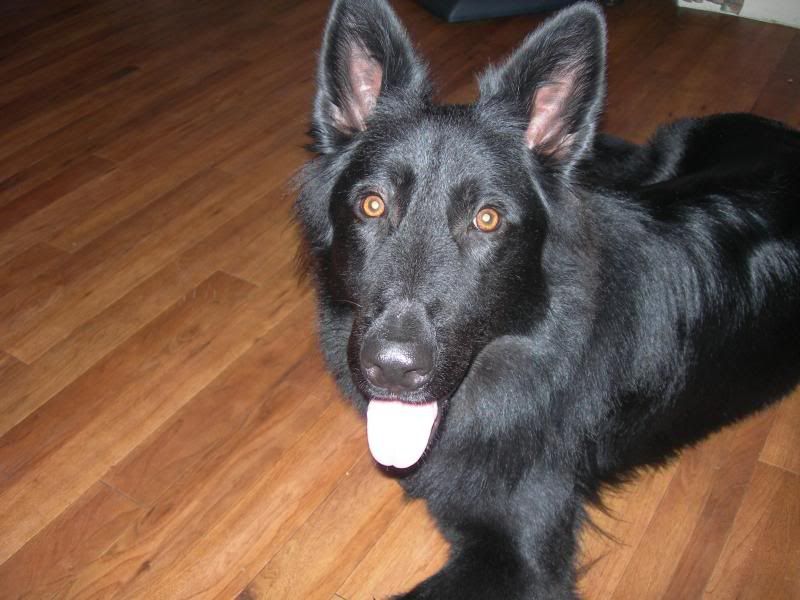
Here is our stinker
Any pics of yours Shexy
Here is our stinker
Les
Guest
Posts: n/a
I did the KC puppy class and then the bronze award with my Lab and she passed both with flying colours. She learnt fine, however what I discovered is no amount of training can stop her stubbornness which is why you hardly ever see chocolate Labs as guide dogs I guess. I didn't go on and do the silver and gold courses. She walks fine on the lead, has no aggression to other dogs, does the usual sit, upsit, down commands etc. Recall is fine if no other dogs but if other dogs about she would rather play than come back for food which for a Labrador really says how much she wants to play! However she is getting better with this as she gets older so a maturity issue.
She is 2 in January and still get occasional mouthing attempts and will jump up at strangers but every Lab owner i've talked to (loads where we live) have all said theirs jumped up until about 2.5 years before they grew out of it and same for mouthing. Again all maturity issues.
Put her bowl of dinner in front of her and she'd win Crufts for obedience.
She is 2 in January and still get occasional mouthing attempts and will jump up at strangers but every Lab owner i've talked to (loads where we live) have all said theirs jumped up until about 2.5 years before they grew out of it and same for mouthing. Again all maturity issues.
Put her bowl of dinner in front of her and she'd win Crufts for obedience.

Scooby Regular
Joined: Dec 2002
Posts: 10,221
Likes: 0
From: Logged Out
I'd hazard a guess most people here work away from their dogs every day. Is that better than having a PP dog by your side all day every day if you want? Simple answer is no. My PP dog goes where I go and is the most incredibly placid natured GSD you'd wish to meet. Píss me off however and he'd love to join in.
You also can't just 'make' a PP dog out of any dog. The dog's drives, temperament and nerves HAVE to be right or you'll be wasting your time. A fierce dog that bites is your worst candidate to be used as a PP dog. That type of dog is no more than a liability.
I have 42 PP dogs on my books worldwide at present and they will have all been chosen carefully by the trainers. Often common bloodlines are used for the reasons above and of course historic health reasons.
A properly trained PP dog, after purchasing the right dog, will cost thousands in man hours and then there's the maintenance refresher training on top.

Scooby Regular
Joined: Jun 2003
Posts: 48,539
Likes: 0
My son has just got himself some kind of a rescue Bull Terrier. I think it is a Staffordshire one  He is 2 years old. My son has booked some training lessons for him. I don't know what he would learn, as he is so well-behaved, anyway. He is very friendly towards the cats, its the cats that wanna claw his gentle face. May be, he will learn to kick cats' @rses via the lessons, I don't know.
He is 2 years old. My son has booked some training lessons for him. I don't know what he would learn, as he is so well-behaved, anyway. He is very friendly towards the cats, its the cats that wanna claw his gentle face. May be, he will learn to kick cats' @rses via the lessons, I don't know.

Scooby Regular
Joined: Dec 2007
Posts: 458
Likes: 0
We didn't do training as such with our Rottie, but our vets did what they call "Puppy Party" classes! Great idea! As soon as your puppy had it's vaccination that meant it could mix with other dogs, you went to puppy party. The dogs were all let off the lead and left to play with each other, including play fighting, to establish boundaries with other dogs. Ours used to get pounced on by a beagle puppy every week, who would have Thunder on his back while he chewed his ears lol!!
The vets would take each dog and check them over whilst this was all happening to make sure that both they and you were progressing as you/they should and trainers would come in and help with basic training.
As a result, our Rottie isn't fazed by other dogs, sits and waits for them to pass him when he's on lead, or plays gently if off lead. He has been bitten/snapped at so many times by smaller dogs whilst he's been out and his response is to come and run and hide behind our legs! He has never responded in a similar manner and has never gone for another dog.
I do credit the puppy parties with this and also our interaction with him. We are a chilled out family and he picks up on that. In fact, Thunder is so laid back that when we got burgled last year, instead of going for the burglar, Thunder followed him into the living room in the hope he could make a new friend!! When I flew down the stairs, Thunder ran back into the kitchen because he knows he's not allowed into the living room at night!!
The vets would take each dog and check them over whilst this was all happening to make sure that both they and you were progressing as you/they should and trainers would come in and help with basic training.
As a result, our Rottie isn't fazed by other dogs, sits and waits for them to pass him when he's on lead, or plays gently if off lead. He has been bitten/snapped at so many times by smaller dogs whilst he's been out and his response is to come and run and hide behind our legs! He has never responded in a similar manner and has never gone for another dog.
I do credit the puppy parties with this and also our interaction with him. We are a chilled out family and he picks up on that. In fact, Thunder is so laid back that when we got burgled last year, instead of going for the burglar, Thunder followed him into the living room in the hope he could make a new friend!! When I flew down the stairs, Thunder ran back into the kitchen because he knows he's not allowed into the living room at night!!

Scooby Newbie
Joined: Jan 2010
Posts: 20
Likes: 0
From: dorset
I went to puppy parties at the local vets and puppy training, very good for socialisation and the training is for YOU they teach you how to train your dog.
I must have cocked up the last bit, Cobblers!
I must have cocked up the last bit, Cobblers!

Scooby Regular
Joined: Nov 2001
Posts: 2,122
Likes: 0
The more socialisation at the earliest age possible is the best thing, my younger dog was at her 1st puppy class at 10 weeks old though she had been to classes as a spectator from 7 1/2 weeks old.
I use clicker training with her and it is a really quick and easy way to teach new things.
I use clicker training with her and it is a really quick and easy way to teach new things.

Dogs generally really enjoy training. It gives them the opportunity to please their owner and earn rewards, as well as exercising their brain - which is just as important as the physical type.
Early socialisation is key to a well adjusted dog - but don't stop with puppy parties. Regular sessions, like obedience classes, or just visiting other friends who own dogs, will also help with this
Early socialisation is key to a well adjusted dog - but don't stop with puppy parties. Regular sessions, like obedience classes, or just visiting other friends who own dogs, will also help with this

Scooby Regular
Joined: Aug 2006
Posts: 4,430
Likes: 1
From: Away from this place
My GSD (Sam ) is now approaching 2 and up till a month ago I'd trained him myself, well that's what I thought anyway... He would sit on the Barbara Woodhouse stylee "Sssit" command, not go upstairs and that was about that - I thought I'd done rather well...
Been going to a retired Police dog handler for a couple of weeks and "**** me" he now sits, stays, jumps over fences, walks towards traffic on the road without aso much as a blink and does exactly what he's told....
He's asked if I want Sam to be trained for protection and while I'd like to say "kill the hoodie" and watch Sam de-bone some chavy ****** I'm not sure if it's a good thing or not.... if I'm not careful I'll be walking round in tactical clothing next
Anyone done similar?
) is now approaching 2 and up till a month ago I'd trained him myself, well that's what I thought anyway... He would sit on the Barbara Woodhouse stylee "Sssit" command, not go upstairs and that was about that - I thought I'd done rather well...Been going to a retired Police dog handler for a couple of weeks and "**** me" he now sits, stays, jumps over fences, walks towards traffic on the road without aso much as a blink and does exactly what he's told....
He's asked if I want Sam to be trained for protection and while I'd like to say "kill the hoodie" and watch Sam de-bone some chavy ****** I'm not sure if it's a good thing or not.... if I'm not careful I'll be walking round in tactical clothing next
Anyone done similar?

Be content with the well disciplined and hopefully happy dog you currently have.
All of ours have been through/are going through structured training. As well as the obvious benefits, they love it as it provides the mental stimulation that many dogs often don't get.

Scooby Regular
Joined: Nov 2000
Posts: 1,432
Likes: 0
From: Glasgow
I have just put a deposit down on a Giant Schnauzer and pick her up next Saturday. Does anyone have one or can recommend a good training book? They have a similar temperament to a GSD and German police use them as police dogs?


The most important thing is to make sure they know YOU are the pack leader not them!! Training for this should start from day one, and must be applied consistently by the entire household.
You control the food. Prepare it at the same time as your own so he knows its there, but eat your own first then let him have his. If you don't normally eat brekkie, then start doing so - if only a slice of toast! This shows his you're the boss so you eat first, then him. This applied to everyone in the house too, including children. Once he's had chance to eat, remove his bowl - even if he's not finished. Only the boss has ready access to food all day, and that doesn't include him! So letting him have food in his dish only reaffirms that he is in charge.
You always lead. Through every doorway, when you go for a walk, etc etc. if he pulls in the lead, stop or change direction. You go nowhere for a while except back and forwards in from of your house, but if you keep it up he'll get the message. You go where YOU say not your hound.
You instigate play. Let him have a few of his own toys to play with on his own, but have "your" toys for when you are interacting with him, that get put away when finished. If he brings a toy to you and you play with it with him, you are basically being told what to do and doing what he says. Have other toys in a box that you get out to play with him, so that you are controlling the situation.
Five minute rule. When returning to the home (or from upstairs/another room, if you have been a while) ignore him and go about your business for five minutes or until he is calm. DO NOT STROKE HIM as difficult as this may seem - especially with a cute puppy! When dogs return to the pack, the will acknowledge the lack by licking them or whatever - which strengthens the alphas dominance. If you come in and immediately stroke your dog, it is telling him that he is the alpha not you. Wait until he is calm then call him over to make a fuss of him.
Danger. If there is a potential threat (visitors to the house, noises, etc) you should basically ignore your dog and any behaviour that results, and continue as normal. If they bark and you shout at them, as far as they are concerned you are barking too so are confirming that behaviour. If you mollycoddle them, then you are rewarding them for that behaviour, again encouraging more of the same. If you just ignore it and carry on, and get visitors to ignore them at first too, then they see that you are the boss (or in the case of a visitor, a boss from another pack) and that they should taek your lead as to how they should behave. if you don't stress, they realise that there is nothing to stress about for them either.
These all show that YOU are the boss and that he has to watch / listen to you for guidance and direction. If you follow these basic rules, it relieves the dog from responsibility of leading/looking after the pack, prevents a whole host of unwanted behaviour, and will make all other training much much easier.
Best of luck!!!!
You control the food. Prepare it at the same time as your own so he knows its there, but eat your own first then let him have his. If you don't normally eat brekkie, then start doing so - if only a slice of toast! This shows his you're the boss so you eat first, then him. This applied to everyone in the house too, including children. Once he's had chance to eat, remove his bowl - even if he's not finished. Only the boss has ready access to food all day, and that doesn't include him! So letting him have food in his dish only reaffirms that he is in charge.
You always lead. Through every doorway, when you go for a walk, etc etc. if he pulls in the lead, stop or change direction. You go nowhere for a while except back and forwards in from of your house, but if you keep it up he'll get the message. You go where YOU say not your hound.
You instigate play. Let him have a few of his own toys to play with on his own, but have "your" toys for when you are interacting with him, that get put away when finished. If he brings a toy to you and you play with it with him, you are basically being told what to do and doing what he says. Have other toys in a box that you get out to play with him, so that you are controlling the situation.
Five minute rule. When returning to the home (or from upstairs/another room, if you have been a while) ignore him and go about your business for five minutes or until he is calm. DO NOT STROKE HIM as difficult as this may seem - especially with a cute puppy! When dogs return to the pack, the will acknowledge the lack by licking them or whatever - which strengthens the alphas dominance. If you come in and immediately stroke your dog, it is telling him that he is the alpha not you. Wait until he is calm then call him over to make a fuss of him.
Danger. If there is a potential threat (visitors to the house, noises, etc) you should basically ignore your dog and any behaviour that results, and continue as normal. If they bark and you shout at them, as far as they are concerned you are barking too so are confirming that behaviour. If you mollycoddle them, then you are rewarding them for that behaviour, again encouraging more of the same. If you just ignore it and carry on, and get visitors to ignore them at first too, then they see that you are the boss (or in the case of a visitor, a boss from another pack) and that they should taek your lead as to how they should behave. if you don't stress, they realise that there is nothing to stress about for them either.
These all show that YOU are the boss and that he has to watch / listen to you for guidance and direction. If you follow these basic rules, it relieves the dog from responsibility of leading/looking after the pack, prevents a whole host of unwanted behaviour, and will make all other training much much easier.
Best of luck!!!!
Scooby Regular
Joined: Nov 2000
Posts: 1,432
Likes: 0
From: Glasgow
The most important thing is to make sure they know YOU are the pack leader not them!! Training for this should start from day one, and must be applied consistently by the entire household.
You control the food. Prepare it at the same time as your own so he knows its there, but eat your own first then let him have his. If you don't normally eat brekkie, then start doing so - if only a slice of toast! This shows his you're the boss so you eat first, then him. This applied to everyone in the house too, including children. Once he's had chance to eat, remove his bowl - even if he's not finished. Only the boss has ready access to food all day, and that doesn't include him! So letting him have food in his dish only reaffirms that he is in charge.
You always lead. Through every doorway, when you go for a walk, etc etc. if he pulls in the lead, stop or change direction. You go nowhere for a while except back and forwards in from of your house, but if you keep it up he'll get the message. You go where YOU say not your hound.
You instigate play. Let him have a few of his own toys to play with on his own, but have "your" toys for when you are interacting with him, that get put away when finished. If he brings a toy to you and you play with it with him, you are basically being told what to do and doing what he says. Have other toys in a box that you get out to play with him, so that you are controlling the situation.
Five minute rule. When returning to the home (or from upstairs/another room, if you have been a while) ignore him and go about your business for five minutes or until he is calm. DO NOT STROKE HIM as difficult as this may seem - especially with a cute puppy! When dogs return to the pack, the will acknowledge the lack by licking them or whatever - which strengthens the alphas dominance. If you come in and immediately stroke your dog, it is telling him that he is the alpha not you. Wait until he is calm then call him over to make a fuss of him.
Danger. If there is a potential threat (visitors to the house, noises, etc) you should basically ignore your dog and any behaviour that results, and continue as normal. If they bark and you shout at them, as far as they are concerned you are barking too so are confirming that behaviour. If you mollycoddle them, then you are rewarding them for that behaviour, again encouraging more of the same. If you just ignore it and carry on, and get visitors to ignore them at first too, then they see that you are the boss (or in the case of a visitor, a boss from another pack) and that they should taek your lead as to how they should behave. if you don't stress, they realise that there is nothing to stress about for them either.
These all show that YOU are the boss and that he has to watch / listen to you for guidance and direction. If you follow these basic rules, it relieves the dog from responsibility of leading/looking after the pack, prevents a whole host of unwanted behaviour, and will make all other training much much easier.
Best of luck!!!!
You control the food. Prepare it at the same time as your own so he knows its there, but eat your own first then let him have his. If you don't normally eat brekkie, then start doing so - if only a slice of toast! This shows his you're the boss so you eat first, then him. This applied to everyone in the house too, including children. Once he's had chance to eat, remove his bowl - even if he's not finished. Only the boss has ready access to food all day, and that doesn't include him! So letting him have food in his dish only reaffirms that he is in charge.
You always lead. Through every doorway, when you go for a walk, etc etc. if he pulls in the lead, stop or change direction. You go nowhere for a while except back and forwards in from of your house, but if you keep it up he'll get the message. You go where YOU say not your hound.
You instigate play. Let him have a few of his own toys to play with on his own, but have "your" toys for when you are interacting with him, that get put away when finished. If he brings a toy to you and you play with it with him, you are basically being told what to do and doing what he says. Have other toys in a box that you get out to play with him, so that you are controlling the situation.
Five minute rule. When returning to the home (or from upstairs/another room, if you have been a while) ignore him and go about your business for five minutes or until he is calm. DO NOT STROKE HIM as difficult as this may seem - especially with a cute puppy! When dogs return to the pack, the will acknowledge the lack by licking them or whatever - which strengthens the alphas dominance. If you come in and immediately stroke your dog, it is telling him that he is the alpha not you. Wait until he is calm then call him over to make a fuss of him.
Danger. If there is a potential threat (visitors to the house, noises, etc) you should basically ignore your dog and any behaviour that results, and continue as normal. If they bark and you shout at them, as far as they are concerned you are barking too so are confirming that behaviour. If you mollycoddle them, then you are rewarding them for that behaviour, again encouraging more of the same. If you just ignore it and carry on, and get visitors to ignore them at first too, then they see that you are the boss (or in the case of a visitor, a boss from another pack) and that they should taek your lead as to how they should behave. if you don't stress, they realise that there is nothing to stress about for them either.
These all show that YOU are the boss and that he has to watch / listen to you for guidance and direction. If you follow these basic rules, it relieves the dog from responsibility of leading/looking after the pack, prevents a whole host of unwanted behaviour, and will make all other training much much easier.
Best of luck!!!!
Scooby Regular
Joined: Nov 2001
Posts: 2,122
Likes: 0
Jer some of that is good advice but not for the Pack Leader idea.
Dogs are not wolves and packs of stray dogs that live on the streets in third world countries that have been studied dont have this rigid pack structure it is an out of date theory.
As i suggested before 2 good books are Culture Clash by Jean Donaldson and Dont shoot the dog by Karen Pryor.
The advice that you cant start to young is very true and the more socialization you get in at an earlier age the better especially if you have a big powerful breed that are used for guarding.
a good source of advice believe it or not is the Walking with dogs forum on the live for the outdoors BBS (at the bottom of the page) ask for Graham the Moderator he has a degree in animal behaviour and is a behaviourist also write articles for a dog magazine plus is the tech editor for Trail walking magazine (its their BBS)Though he owns a rescue Lab and rescue Collie. he is good for practical advice and very helpful, some of the other people on there are a bit strange
Dogs are not wolves and packs of stray dogs that live on the streets in third world countries that have been studied dont have this rigid pack structure it is an out of date theory.
As i suggested before 2 good books are Culture Clash by Jean Donaldson and Dont shoot the dog by Karen Pryor.
The advice that you cant start to young is very true and the more socialization you get in at an earlier age the better especially if you have a big powerful breed that are used for guarding.
a good source of advice believe it or not is the Walking with dogs forum on the live for the outdoors BBS (at the bottom of the page) ask for Graham the Moderator he has a degree in animal behaviour and is a behaviourist also write articles for a dog magazine plus is the tech editor for Trail walking magazine (its their BBS)Though he owns a rescue Lab and rescue Collie. he is good for practical advice and very helpful, some of the other people on there are a bit strange
Scooby Regular
Joined: Aug 2006
Posts: 4,430
Likes: 1
From: Away from this place
Jer some of that is good advice but not for the Pack Leader idea.
Dogs are not wolves and packs of stray dogs that live on the streets in third world countries that have been studied dont have this rigid pack structure it is an out of date theory.
As i suggested before 2 good books are Culture Clash by Jean Donaldson and Dont shoot the dog by Karen Pryor.
The advice that you cant start to young is very true and the more socialization you get in at an earlier age the better especially if you have a big powerful breed that are used for guarding.
a good source of advice believe it or not is the Walking with dogs forum on the live for the outdoors BBS (at the bottom of the page) ask for Graham the Moderator he has a degree in animal behaviour and is a behaviourist also write articles for a dog magazine plus is the tech editor for Trail walking magazine (its their BBS)Though he owns a rescue Lab and rescue Collie. he is good for practical advice and very helpful, some of the other people on there are a bit strange
Dogs are not wolves and packs of stray dogs that live on the streets in third world countries that have been studied dont have this rigid pack structure it is an out of date theory.
As i suggested before 2 good books are Culture Clash by Jean Donaldson and Dont shoot the dog by Karen Pryor.
The advice that you cant start to young is very true and the more socialization you get in at an earlier age the better especially if you have a big powerful breed that are used for guarding.
a good source of advice believe it or not is the Walking with dogs forum on the live for the outdoors BBS (at the bottom of the page) ask for Graham the Moderator he has a degree in animal behaviour and is a behaviourist also write articles for a dog magazine plus is the tech editor for Trail walking magazine (its their BBS)Though he owns a rescue Lab and rescue Collie. he is good for practical advice and very helpful, some of the other people on there are a bit strange
"Pack ranking" as a concept has worked extremely well for us with the Rotties - although I'd probably agree that there are more modern terms for the same thing. Consistency is key.
Having had three of them together for a while there is no question they have a clear and distinct ranking amongst themselves. Granted its not rigid in that the dynamic changes as they grown and evolve. What was without doubt is how the dynamic changed completely when we lost our eldest. And not just between the remaining two, but in how they interacted with us.
I don't dispute that domestic dogs are far removed from their wild counterpart, but I've experienced first hand the dogs having a clear hierarchy. Pack ranking may not be fashionable as an expression, but its a perfectly good description of what exists.
Breeds will probably differ, but I do know that happy and well balanced Rotties are Rotties that understand their place and role in the household. Dogs that will, for example, sleep silently until we have finished eating.
I've heard behaviorists from all sides come up with many different concepts and theories. Some decry the whole "pack" concept and some that embrace it. Ultimately what is best is what works for the dog(s) in question.
Scooby Regular
Joined: Aug 2006
Posts: 4,430
Likes: 1
From: Away from this place
Scooby Regular
Joined: Nov 2001
Posts: 2,122
Likes: 0
Devildog i think you make some very good points the dogs like to know who is in charge in different situations, but our family has 4 dogs living in two different houses and there is no ridged pack order and certainly the supposed Alpha role is filled by different dogs in different situations.
I agree that you should train dogs to understand basic manners in the house and show them where the boundaries are, i differ on how this should be done by thinking most of this can be done by positive training and not by trying to demonstrate the supposed Pack position of the owner.
E.g. i taught my dogs with treats to stop at gates when out in the fields and wait whilst i open it call them thru and ask them to sit whilst i shut the gate before continuing the walk or to release the dogs to run free. this is just basic dog control they do it for the rewards and dont think any thing about pack position
As i said get those books from amazon and read them they make for great advice
I agree that you should train dogs to understand basic manners in the house and show them where the boundaries are, i differ on how this should be done by thinking most of this can be done by positive training and not by trying to demonstrate the supposed Pack position of the owner.
E.g. i taught my dogs with treats to stop at gates when out in the fields and wait whilst i open it call them thru and ask them to sit whilst i shut the gate before continuing the walk or to release the dogs to run free. this is just basic dog control they do it for the rewards and dont think any thing about pack position
As i said get those books from amazon and read them they make for great advice

Thread
Thread Starter
Forum
Replies
Last Post