


Block and head casting plug removal for skimming?


Thread Starter


Joined: Aug 2015
Posts: 851
Likes: 17
From: West Midlands
 Block and head casting plug removal for skimming?
I've stripped the blocks and heads back to the castings ready for them to be resurfaced this weekend. I'm thinking of removing the casting plugs, like the three in the image below, so that any metal swarf can be washed out more easily. They seem pretty tight and before I impact them off with a hand impact tool, can someone advise....
Firstly, should I take them out?
Secondly, if yes, the tighten torques for when I refit them, or a link to somewhere that shows it?
Presumably they need some kind of thread sealer applied also?
Cheers!
Firstly, should I take them out?
Secondly, if yes, the tighten torques for when I refit them, or a link to somewhere that shows it?
Presumably they need some kind of thread sealer applied also?
Cheers!
Last edited by Bazil_SW; Mar 8, 2017 at 02:34 PM.
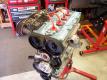

Remove the oil gallery bungs, front & rear, & on the inlet & exhaust sides, these are the small 1/8npt ones, you will need heat on them, you will also need to remove the oil restrictor in the gallery to clean them & replace it afterwards.
The big plug in the pic is to a water gallery only, that is not needed to be removed as its easily cleaned out from the fire face water galleries.
The bungs will need a sealant on them, I use Loctite 572, don't know of a torque value for them, as they are a tapered plug, so don't need to be that tight to seal.
The big plug in the pic is to a water gallery only, that is not needed to be removed as its easily cleaned out from the fire face water galleries.
The bungs will need a sealant on them, I use Loctite 572, don't know of a torque value for them, as they are a tapered plug, so don't need to be that tight to seal.
Thread Starter
Joined: Aug 2015
Posts: 851
Likes: 17
From: West Midlands
Remove the oil gallery bungs, front & rear, & on the inlet & exhaust sides, these are the small 1/8npt ones, you will need heat on them, you will also need to remove the oil restrictor in the gallery to clean them & replace it afterwards.
The big plug in the pic is to a water gallery only, that is not needed to be removed as its easily cleaned out from the fire face water galleries.
The bungs will need a sealant on them, I use Loctite 572, don't know of a torque value for them, as they are a tapered plug, so don't need to be that tight to seal.
The big plug in the pic is to a water gallery only, that is not needed to be removed as its easily cleaned out from the fire face water galleries.
The bungs will need a sealant on them, I use Loctite 572, don't know of a torque value for them, as they are a tapered plug, so don't need to be that tight to seal.
Thanks for the advise, and that from the other thread to!
Thread Starter
Joined: Aug 2015
Posts: 851
Likes: 17
From: West Midlands
and, in the event that non of them show any sign whatsoever of moving and round off...... then clean out with a hose pipe after skimming?
Not saying that has happened, just saying....
Not saying that has happened, just saying....
They want cleaning out with a suitable bottle brush, flushing through with a solvent, then a very good high pressure air line, to get everything out, otherwise the first time you get oil pressure up it push through the gallery whatever you leave in there.
Thread Starter
Joined: Aug 2015
Posts: 851
Likes: 17
From: West Midlands
All of which I can do. Cheers!

Trending Topics
Thread Starter
Joined: Aug 2015
Posts: 851
Likes: 17
From: West Midlands
aye I will ask at the machine shop if they do it. The engine was rebuilt about 15k miles ago and heads were apparently reconditioned then, but it's overheated twice since (hence the rebuild now).
Thread Starter
Joined: Aug 2015
Posts: 851
Likes: 17
From: West Midlands
In a previous post on this subject it was mentioned to drill these and use some kind of snap on tool to remove them.
Does anyone know if these would work as a replacements: link
I'm still wanting to tackle this properly and make sure that everything is fully cleaned out!
Does anyone know if these would work as a replacements: link
I'm still wanting to tackle this properly and make sure that everything is fully cleaned out!
Last edited by Bazil_SW; Mar 9, 2017 at 10:53 PM.


A machine shop should be able to use a process called "spark erosion" to get the broken / mauled plug out. AFAIK it's not massively expensive either.
For replacements, I'd personally be a bit careful with stainless steel. Stainless steel and aluminium will cause galvanic corrosion, although I'm not sure it'd be a problem in this application per se, but worth looking into before (then again, if there were issues, it'd probably take years for them to manifest)
For replacements, I'd personally be a bit careful with stainless steel. Stainless steel and aluminium will cause galvanic corrosion, although I'm not sure it'd be a problem in this application per se, but worth looking into before (then again, if there were issues, it'd probably take years for them to manifest)
Thread Starter
Joined: Aug 2015
Posts: 851
Likes: 17
From: West Midlands
A machine shop should be able to use a process called "spark erosion" to get the broken / mauled plug out. AFAIK it's not massively expensive either.
For replacements, I'd personally be a bit careful with stainless steel. Stainless steel and aluminium will cause galvanic corrosion, although I'm not sure it'd be a problem in this application per se, but worth looking into before (then again, if there were issues, it'd probably take years for them to manifest)
For replacements, I'd personally be a bit careful with stainless steel. Stainless steel and aluminium will cause galvanic corrosion, although I'm not sure it'd be a problem in this application per se, but worth looking into before (then again, if there were issues, it'd probably take years for them to manifest)